A few basics help us tailor the questions to your age and body. Takes about a minute.
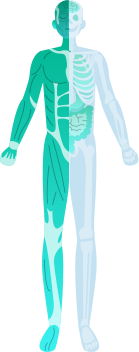
Start by tapping the body area where you feel it, on the model or in the list above.
This tool shares general health information and is not a medical diagnosis. In an emergency, call your local emergency number.
FAQs
Frequently asked.
Our interactive symptom checker provides a visual anatomical body map and organ selector. By clicking or tapping on specific body parts or internal organs, you can select multiple areas where you feel discomfort. The tool filters verified clinical symptoms for each area, assesses potential urgency levels (Routine, Moderate, Urgent), and guides you toward safe self-care or direct telehealth consultations with 24/7 AI Doctors and board-certified clinicians.
Yes! Health symptoms rarely occur in complete isolation. You can tap multiple body parts at the same time—such as Head, Chest, and Neck—and each will highlight in vibrant red. The system cross-references symptoms across all selected regions to deliver a comprehensive clinical triage overview.
No. The My Juno Health symptom checker is an educational and clinical triage assistance tool designed to help you organize your symptoms, understand potential urgency levels, and prepare for medical consultations. It does not provide definitive medical diagnoses. If you experience chest pain radiating to your jaw, sudden one-sided facial drooping or weakness, severe breathing difficulty, or uncontrolled bleeding, please call 911 or visit the nearest emergency room immediately.
Our symptom databases, red-flag triage algorithms, and clinical protocols are developed in collaboration with board-certified physicians, emergency medicine doctors, and clinical researchers, cross-referenced with established medical standards from PubMed, the American College of Physicians, and the CDC.
Yes! In the My Juno Health mobile application, your reported symptoms are automatically synchronized with your real-time wearable telemetry—including resting heart rate (HR), Heart Rate Variability (HRV), blood oxygen (SpO2), skin temperature, and sleep recovery scores—allowing our 24/7 AI Doctor to provide personalized, context-aware health insights.
Absolutely. My Juno Health enforces strict zero-data-selling policies and complies with HIPAA, HITECH, and GDPR standards. All health assessments and biometric transmissions are encrypted with AES-256 and TLS 1.3 encryption protocols.
24/7 AI Health Companion
Continuous Medical Guidance in the Juno App
Connect your continuous wearable telemetry with our board-certified AI doctor for personalized symptom triage, medication alerts, and 1-on-1 nutritionist sessions.
What is an online symptom checker?
A symptom checker asks about what you feel and suggests possible causes, how urgent they may be, and what kind of doctor to see. The My Juno Health symptom checker is free, takes about two minutes and needs no account.
This tool gives general information and is not a diagnosis. If you have chest pain, trouble breathing, signs of a stroke or severe bleeding, call your local emergency number right away.
How it works
1
Tap where it hurts. Select one or more body areas or organs on the body map.
2
Tell us about you. Enter your age, gender, height and weight so questions fit you.
3
Describe how you feel. Rate how strong it is, how long it has lasted and how often it happens.
4
Answer a few questions. Answer short follow-up questions that narrow down the possible causes.
5
Get your report. See possible conditions, how urgent it is, what to do next and which doctor to see.
Complete Anatomical Body Parts and Clinical Symptom Index
The My Juno Health interactive symptom checker allows patients and clinicians to map symptoms across every major anatomical body part and organ system:
Head & Cranium
Cranial region covering temples, forehead, occiput, and scalp.
Tension or Pressure Headache (Severity: low). Causes: Dehydration, Screen fatigue, Cervical tightness, Stress. Self-care: Hydrate with electrolytes; Dim screen lighting; Gentle neck stretches
Throbbing Migraine / Light Sensitivity (Severity: medium). Causes: Neurological vascular shifts, Hormonal triggers, Sleep irregularity. Self-care: Rest in a cool, dark room; Cold compress on forehead; Magnesium glycinate
Dizziness or Spinning Sensation (Severity: medium). Causes: Inner ear vestibular imbalance, Orthostatic hypotension, Dehydration. Self-care: Sit down immediately; Drink cool water; Avoid sudden posture changes
Face & Jaw
Facial musculature, jaw (TMJ), cheeks, and trigeminal nerve pathways.
Runny Nose / Clear or Colored Discharge (Severity: low). Causes: Upper respiratory tract infection, Histamine response, Temperature shift. Self-care: Oral antihistamines if allergic; Rest and warm herbal tea
Mouth, Teeth & Throat
Oral cavity, tongue, dentition, pharynx, tonsils, and vocal cords.
Scratchy or Painful Sore Throat (Severity: medium). Causes: Pharyngitis (viral/bacterial), Post-nasal drip, Acid reflux irritation. Self-care: Warm salt water gargle; Raw honey & warm tea
Pain When Swallowing (Odynophagia) (Severity: medium). Causes: Tonsillitis, Streptococcal pharyngitis, Severe dry throat. Self-care: Stay well hydrated with soft cool foods; Consult doctor if fever > 101F
Neck & Cervical Spine
Cervical vertebrae (C1-C7), sternocleidomastoid, trapezius, and thyroid gland.
Swollen or Tender Lymph Nodes (Severity: medium). Causes: Active immune response, Pharyngitis, Dental infection. Self-care: Avoid aggressive palpation; Monitor if swelling reduces within 1-2 weeks
Chest, Ribs & Thoracic
Thoracic cage, intercostal muscles, sternum, and bronchial branches.
Sharp Pain When Breathing or Pressing Sternum (Severity: medium). Causes: Costochondritis (cartilage inflammation), Intercostal muscle strain, Heavy bench press. Self-care: Gentle thoracic spine extension; Avoid aggressive chest compression; Topical anti-inflammatory gel
Burning Sensation Behind Breastbone (Severity: low). Causes: Acid reflux (GERD), Late night eating, Trigger foods (coffee, spicy, citrus). Self-care: Remain upright for 3h after eating; Drink alkaline water; Elevate head of bed 6 inches
Crushing Chest Pressure Radiating to Arm/Jaw (Severity: high). Causes: Acute coronary syndrome, Myocardial ischemia, Emergency cardiac condition. Self-care: CALL 911 OR VISIT EMERGENCY ROOM IMMEDIATELY — Do not wait
Abdomen & Digestive Core
Central and lower abdominal quadrants including visceral cavity, peritoneum, and core wall.
Intermittent Abdominal Cramping & Bloating (Severity: low). Causes: Gas accumulation, Indigestion, Irritable bowel flare, Food sensitivity. Self-care: Warm peppermint or ginger tea; Apply heating pad on abdomen; Avoid carbonated beverages
Sharp Pain in Lower Right Abdomen (Severity: high). Causes: Acute appendicitis, Ovarian cyst rupture, Mesenteric lymphadenitis. Self-care: DO NOT apply direct heat or take laxatives; Seek urgent hospital evaluation immediately
Back & Lumbar Spine
Thoracic and lumbar vertebrae (L1-L5), sacrum, erector spinae, and latissimus dorsi.
Sharp Shooting Pain Down Glute & Leg (Severity: medium). Causes: Lumbar disc protrusion, Piriformis syndrome, Sciatic nerve entrapment. Self-care: Gentle nerve flossing; Avoid deep forward bending with locked knees; Ergonomic lumbar support
Arms, Wrists & Hands
Shoulder joint (rotator cuff), biceps/triceps, forearms, carpal tunnel, and phalanges.
Wrist Ache, Tingling or Numb Fingers (Severity: medium). Causes: Median nerve compression, Repetitive keyboard/mouse strain, Wrist flexion during sleep. Self-care: Wear a neutral wrist splint at night; Take micro-breaks from typing; Use vertical ergonomic mouse
Shoulder Impingement When Raising Arm (Severity: medium). Causes: Rotator cuff tendonitis, Subacromial bursitis, Overhead press strain. Self-care: Ice shoulder for 15 min; Avoid painful overhead ranges; Perform light band face-pulls
Knee Aches or Crepitus When Squatting (Severity: medium). Causes: Patellofemoral pain syndrome, Meniscal strain, Tight quadriceps/IT band. Self-care: Strengthen VMO and glute medius; Avoid deep impact running temporarily; Foam roll quads
Sharp Heel Pain With First Morning Steps (Severity: low). Causes: Plantar fascia microtears, High/flat arch strain, Unsupportive footwear. Self-care: Roll foot over frozen water bottle; Calf and achilles eccentric stretches; Supportive arch footwear
Skin & Dermatological
Integumentary system covering dermal layers, epidermis, sweat glands, and allergic barrier responses.
Itchy Red Rash or Hives (Urticaria) (Severity: medium). Causes: Contact dermatitis, Food or medication allergy, Heat rash, Eczema flare. Self-care: Cool oatmeal bath; Over-the-counter hydrocortisone 1%; Identify and remove topical irritants
Severe Dry, Flaky or Cracked Patches (Severity: low). Causes: Low ambient humidity, Harsh soaps, Compromised skin lipid barrier. Self-care: Apply ceramide barrier ointment within 3 min of bathing; Switch to gentle fragrance-free cleansers
General & Systemic Symptoms
Systemic wellness indicators affecting overall energy, metabolism, and immune resilience.
Unexplained Chronic Exhaustion & Low Energy (Severity: medium). Causes: Non-restorative sleep, Anemia / iron deficiency, Thyroid imbalance, Chronic stress. Self-care: Track sleep telemetry in Juno; Optimize circadian daylight exposure; Check CBC and ferritin
Fever, Body Chills or Night Sweats (Severity: medium). Causes: Systemic viral / bacterial immune response, Acute inflammatory reaction. Self-care: Complete bed rest; Drink warm broth and electrolyte water; Monitor oral temperature
Neurocognitive resilience, stress response, emotional equilibrium, and mood stability.
Chest Tightness, Racing Thoughts & Restlessness (Severity: medium). Causes: Sympathetic nervous system overload, High cortisol, Caffeine sensitivity. Self-care: Practice 4-7-8 physiological sigh breathing; Step outside for a 15-minute brisk walk; Avoid stimulants
Difficulty Falling or Staying Asleep (Insomnia) (Severity: low). Causes: Blue light display exposure, Late evening cortisol spikes, Irregular wake times. Self-care: No screens 60 minutes before bed; Keep bedroom cool (65-68°F); Consistent morning wake time
Emotional Exhaustion, Cynicism & Burnout (Severity: medium). Causes: Prolonged chronic workplace overload, Lack of restorative recovery boundaries. Self-care: Enforce hard work cutoffs; Engage in non-goal recreational activities; Consult licensed therapist
Muscles & Joints (General)
Full body musculoskeletal system, synovial joints, ligaments, tendons, and myofascial chains.
Delayed Onset Muscle Soreness (DOMS) (Severity: low). Causes: Eccentric weightlifting overload, Novel athletic workout, Micro-tears in muscle tissue. Self-care: Active recovery walk or light swim; Consume 1.6-2.2g/kg protein; Epsom salt warm bath